|
|
|
USP797 Consulting
Services
Representative Projects:
|
 |
 |
 |
 |
 |
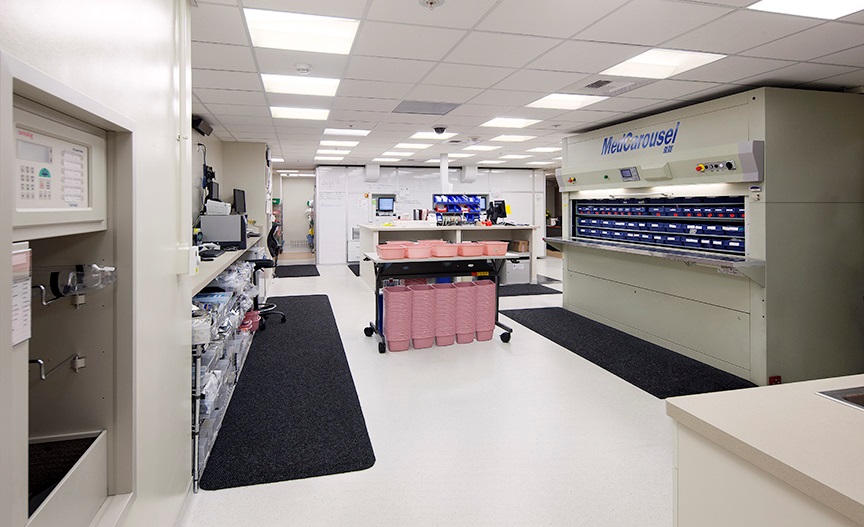
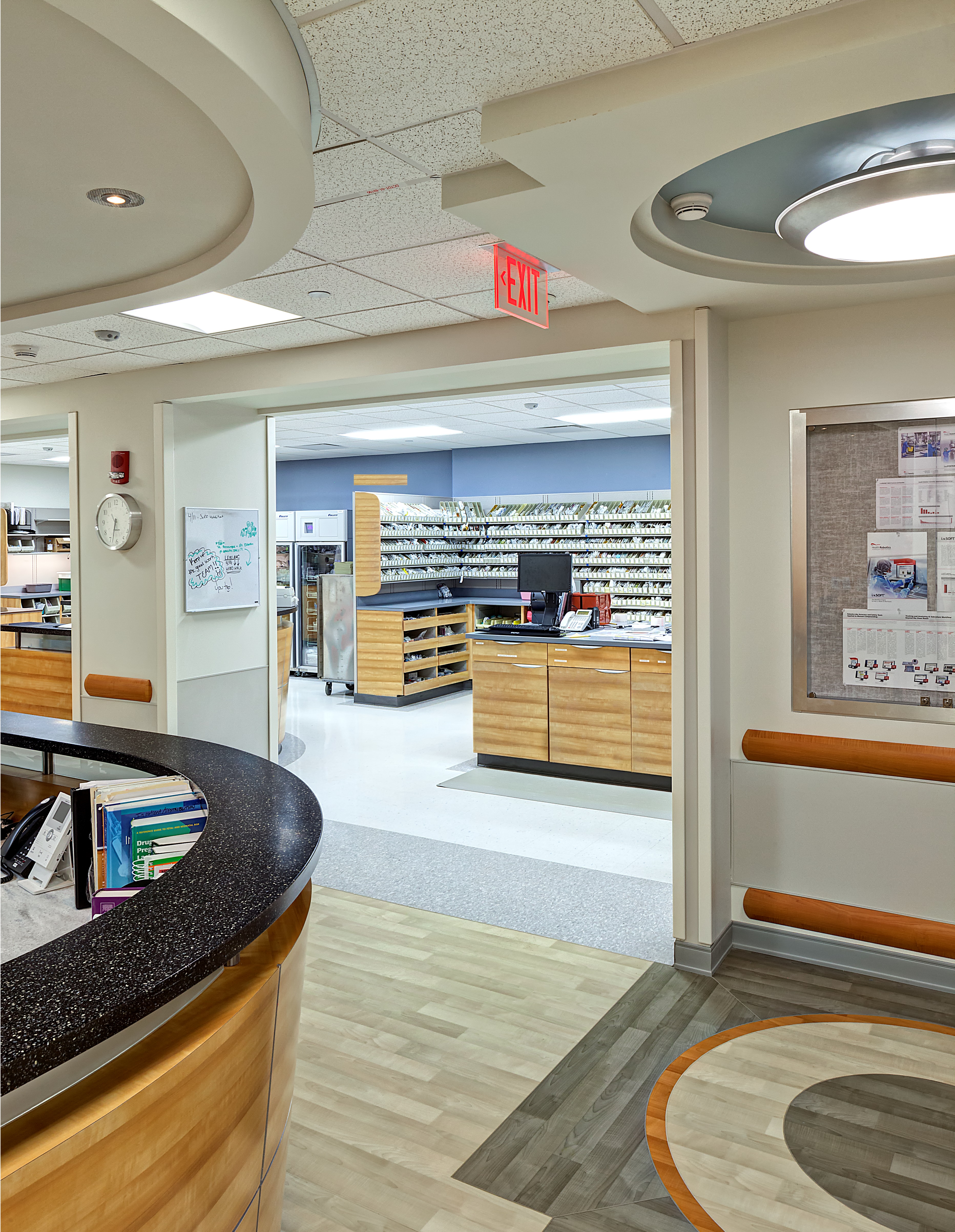
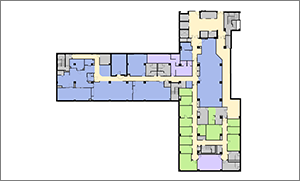
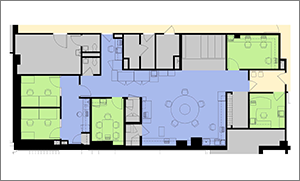
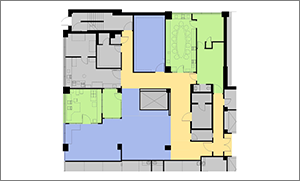
New Pharmacy and
Pathology Suite - Queens NY
|
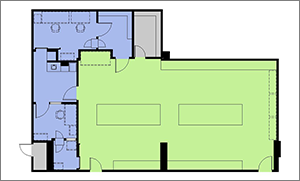
New Hospital Pyxis
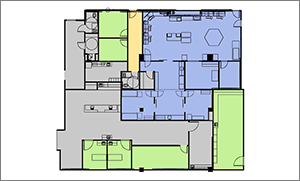
Installation
Queens NY
|
New Hospital Pyxis
Installation
Queens NY
|
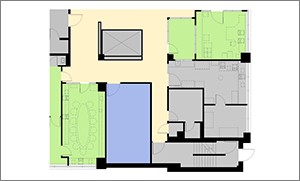
Pharmacy Upgrade Phase
1
New York, NY
|
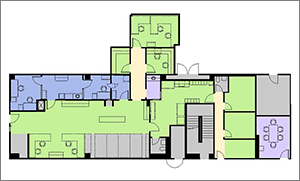
Pharmacy Upgrade Phase
2
New York, NY
|
|
 |
 |
 |
 |
 |
Pharmacy Upgrade Phase
2
New York, NY
|
Pharmacy Upgrade Phase
1
New York, NY
|
Pharmacy Upgrade Phase
1
New York, NY
|
Pharmacy Upgrade Phase
2
New York, NY
|
Pharmacy Upgrade Phase
1
New York, NY
|
|
 |
 |
 |
 |
 |
Pharmacy Upgrade Phase
2
New York, NY
|
Pharmacy Upgrade Phase
1
New York, NY
|
Pharmacy Upgrade Phase
2
New York, NY
|
Pharmacy Upgrade Phase
1
New York, NY
|
Pharmacy Upgrade Phase
1
New York, NY
|
|
 |
 |
 |
 |
|
Pharmacy Upgrade Phase
2
New York, NY
|
Pharmacy Upgrade Phase
1
Brooklyn, NY
|
New Hospital Pharmacy -
Buffalo, NY
|
New Hospital Pharmacy -
Brooklyn, NY
|
|
USP
797 : Jump-Starting Your Pharmacy into Compliance
© William N. Bernstein, LEED®AP, AIA - 2005
By now, if you
are a hospital manager, you’ve probably heard about it : USP 797.
But what is it exactly, and what architectural and environmental
changes are most likely required to bring your pharmacy into
compliance?
To begin with,
USP 797 is a fairly recent regulation, designed both to cut down
on infections transmitted to patients through pharmaceutical
products and also to better protect staff working in pharmacies in
the course of their exposure to pharmaceuticals. Issued by U.S.
Pharmacopeia (USP), the regulation governs any pharmacy which
prepares --- as most do --- “compounded sterile preparations” (CSPs).
The reason USP
797 has become such a big deal in the health care environment can
be summed up in five letters : JCAHO. Having endorsed USP 797,
JCAHO now mandates compliance according to the following schedule
:
 |
07/01/04:
JCAHO began surveying for compliance with USP 797
|
 |
07/31/05:
JCAHO deadline for an “Approved Facility Renovation Plan” (AFRP)
|
 |
07/31/08:
JCAHO deadline for completion of construction of the AFRP
|
Now USP 797 is a
far-reaching regulation that governs a wide-range of pharmacy
policies and procedures. This article focuses only on the
architectural and environmental changes that WP 797 will likely
require in your pharmacy.
The first step in
the process of compliance is the categorization of your pharmacy
into one of the following categories: “Low-Risk Level CSP”,
“Medium-Risk Level CSP”, or “High-Risk Level CSP”
A complete
explanation of the parameters of “Low”, “Medium”, and “High-Risk
Level” is outside the scope of this article. A flavor of these
categories, however, can be obtained via the following examples of
compounding:
Examples of
Low-Risk Compounding :
 |
“Single
transfers of sterile dosage forms from ampuls, bottles, bags and
vials using sterile syringes with sterile needles, other
administration devices and other sterile containers…”
|
 |
“Manually
measuring and mixing no more than three (3) manufactured
products to compound drug admixtures…”
|
Examples of
Medium-Risk Compounding :
 |
“Compounding
of total parenteral nutrition fluids using manual or automated
devices…” |
 |
“Filling of
reservoirs of injection and infusion devices with multiple
sterile drug products…” |
 |
“Filling of
reservoirs of injection and infusion devices with volumes of
sterile drug solutions…” |
 |
“Transfer of
volumes from multiple ampuls or vials into a single final
sterile container or product” |
Examples of
High-Risk Compounding :
 |
“Dissolving
nonsterile bulk drug and nutrient powders to make solutions
which will be terminally sterilized” |
 |
“Sterile
ingredients, components, devices and mixtures are exposed to air
quality inferior to ISO Class 5…” |
 |
“Measuring and
mixing sterile ingredients in nonsterile devices before
sterilization is performed.” |
 |
“Assuming,
without appropriate evidence or direct determination, that
packages of bulk ingredients contain at least 95% by weight of
their active chemical moiety and have not been contaminated or
adulterated between uses.” |
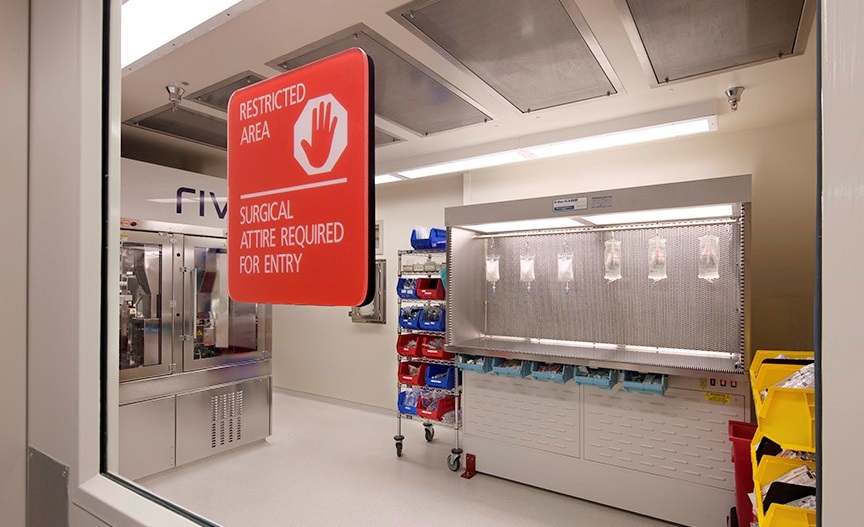
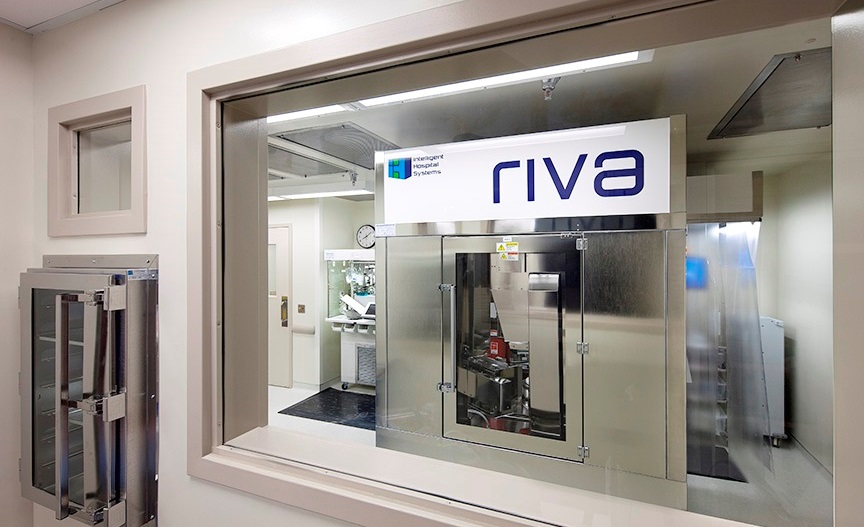
The over-riding
physical requirement of USP 797 is the creation of two zones : a
“Buffer Room” (in general, where the sterile compounding is done)
as well as an “Anteroom” (in general, where non-sterile
compounding activities occur such as hand washing, storage,
measuring/weighing/mixing of non-sterile substances, etc.).
There is a
critical difference, however, between the configuration of Buffer
Room and Anteroom in a Low, Medium or High Risk environment. In a
Low or Medium Risk environment, the Buffer Room and Anteroom can
be in one shared room. In a High Risk environment, however, the
Buffer Room and Anteroom must be separated by a wall with a door.
USP 797 provides
additional direction on the cleanliness or purity of the air in
the Buffer Room. To begin with, actual compounding of sterile
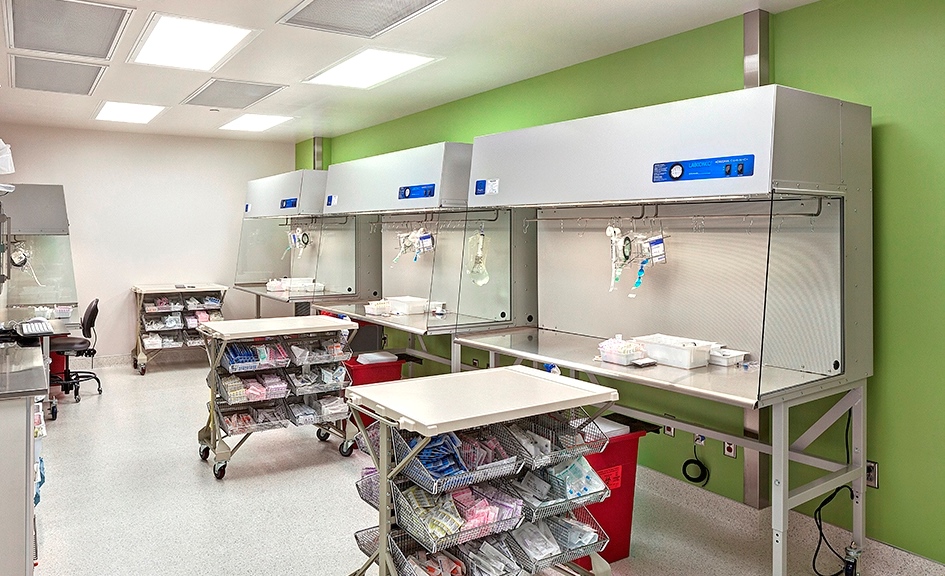
substances must be done in a “laminar airflow workbench” (LAFW),
which must provide an air purity micro-environment of IS0-5
(equivalent to a “Class 10” cleanroom). The ISO-5 LAFW, in turn
must be located in the Buffer Room which must itself provide air
quality equal to ISO-8 (equivalent to a “Class 100,000”
cleanroom). To complicate matters a bit, there is current
discussion that the Buffer Room air purity level requirement may
be raised to ISO-7 in the next version of the regulations.
A final area
worth noting is the guidelines for architectural finishes in the
Buffer Room. All surfaces --- ceiling, walls, floors, fixtures,
shelving, counters and cabinets --- should be “smooth, impervious,
free from cracks and crevices, and nonshedding…”. Junctures of
ceilings to walls should be coved. Wall construction should be
either a locked panel system or epoxy-coated gypsum board. Floors
should be sheet vinyl with heat-welded seams and coved base.
Exterior surfaces of lighting fixtures should be smooth, mounted
flush and sealed. There should be no sinks or floor drains in this
area, and work surfaces should ideally be stainless steel.
Is your pharmacy
environment USP 797 compliant? Contact Bernstein & Associates,
Architects to discuss : USP 797 Gap Analysis reports, USP 797
Compliance Action Plans, USP Design and Construction services, and
a schedule for USP 797 Compliance.
Completed USP 797 Consulting Services include the Following:
USP 797 Gap Analysis
USP 797 Corrective Action Plans
USP 797 Consulting Services
USP 797 JCAHO Compliance
Gap Analysis for USP 797
Corrective Action Plans for USP 797
Consulting Services for USP 797
JCAHO Compliance for USP 797
|